

The BBC is keeping the option of locking BBC iPlayer to TV Licence payers firmly on the table, with a senior executive telling staff this week that putting a gate in front of the service could become “an opportunity” for the corporation in future.
Kerris Bright, the BBC’s chief customer officer, made the comments on an all-staff call on Monday.
Deadline reported them after obtaining audio of the session, and they are the clearest sense we have had of how seriously the idea is being taken inside the BBC.
Her case for not doing it today is a practical one: it would cost more than it brings in, and the people it would irritate most are the ones already paying.
But she was explicit that this is a question of timing rather than principle, pointing to a future, more internet-delivered television world in which a licence check could be built with far less hassle for viewers.
Part of the reason a gate on iPlayer is close to useless today is that anyone locked out can simply switch on their Freeview aerial and carry on watching.
But the government has already published its plan to switch that aerial off, with 2034 as its preferred date. In that world, a lock on iPlayer stops being a mild inconvenience and starts being the whole ballgame.
There’s a large caveat attached, and Bright named it herself: whether any of this makes sense depends entirely on what replaces the licence fee – a question the government won’t answer until later this year.
There’s also the small matter of what happens to Channel 4’s programmes, which the BBC wants inside iPlayer, and which you can currently watch without a licence at all.
What Was Actually Said
Bright’s argument against putting a gate on iPlayer right now comes down to two things – money and annoyance.
On money, she pointed out that iPlayer is effectively the only BBC service you could realistically put a barrier in front of, because it is the only one that legally requires a licence in its own right.
But the numbers, she said, don’t support doing it. There is probably more cost involved than revenue to be gained, and it is not, as she put it to staff, a “silver bullet” for the BBC’s income problem.
On annoyance, the point is sharper. Most licence fee evasion, Bright said, is not happening on iPlayer at all. And most people using iPlayer are already paying.
Put a gate up, and the people who run into it hardest are the ones doing everything right.
She was blunt about how clunky that would feel in practice, telling colleagues it would be a difficult experience to ask viewers to go and find their TV Licence details in order to type them into the app.
It’s a fair point about how iPlayer works today. You do already need a BBC account to watch anything, and the service occasionally asks whether you have a TV Licence.
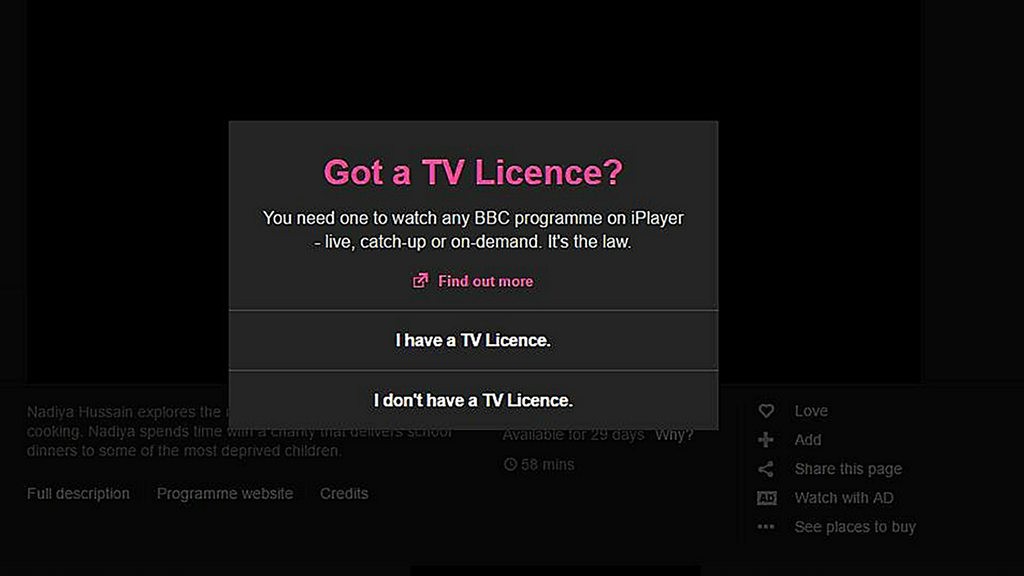
But it takes your word for it. There is no check, no licence number, no proof. It’s a question, not a lock.
This Argument Isn’t New
If this sounds familiar, that’s because the BBC has been fending off this suggestion for a while.
Parliament’s Public Accounts Committee explicitly recommended the approach back in November.
Since you have to sign in to use iPlayer, the thinking went, the BBC could simply match account holders against the licence database and shut out anyone not paying.
The BBC’s response came in March, in a 100-page document called A BBC For All – its formal submission to the government’s Charter Review, the once-a-decade process that decides what the BBC is for and how it gets paid.
That document poured cold water on the idea, and it did so with figures. Around 80% of households that evade the licence fee do use iPlayer.
But fewer than 5% use iPlayer alone. Almost all of them are also watching live television through ordinary channels, which requires a licence regardless.
So blocking iPlayer wouldn’t stop them watching. It would just close one door in a house with several.
What Bright has done is restate that position five months later, to her own staff, with one addition that matters: the door has been left open.
The Aerial Is The Reason It Doesn’t Work
The reason gating iPlayer fails today is that there is an entire delivery route the BBC cannot see and cannot switch off.
If someone stops paying and loses iPlayer access, they can still watch BBC One through a Freeview aerial (or a Freesat dish). Nothing about that changes.
Bright’s comments about the future are where that gets complicated. She told staff that as we move towards more of an IPTV world, with audience behaviour changing and new ways of building experiences that carry less friction, a gate on iPlayer “might absolutely be an opportunity for us, depending on the funding model.”
She framed that as a technical point. In an internet-delivered world, verifying a licence becomes less painful, so the case against gating on friction grounds weakens.
But it cuts the other way too.
The government has already set out its intention to switch off aerial-delivered Freeview and move free television onto broadband.
Its recent media Green Paper put forward two possible dates – a preferred 2034, or a later 2044 – with a public consultation running until the end of August.
The replacement, Freely, pipes live channels through your broadband connection instead of an aerial.
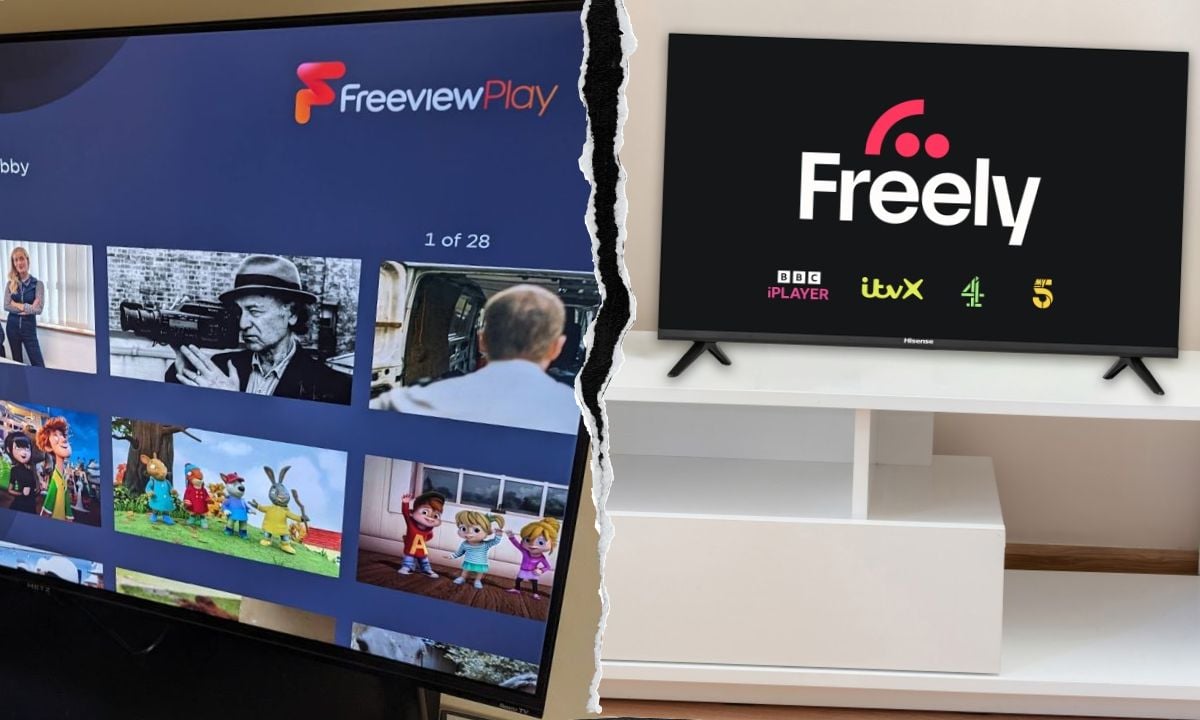
In that world, iPlayer stops being one of several ways to watch the BBC. It becomes THE way. There is no aerial to fall back on and no separate route to close.
So the same shift that makes a gate easier to build also makes it far more effective. Today, locking iPlayer catches a fraction of evaders and irritates paying customers. After a switch-off, it would catch nearly all of them.
Why The BBC Is Even Thinking About It
The pressure behind all of this is severe, and it got worse this month.
The BBC’s latest annual report showed 23.3 million licences in force at the end of March 2026, down 539,000 in a single year.
Only 62,000 of those households formally told TV Licensing they no longer needed one, which leaves roughly 477,000 who simply cancelled and said nothing.
That is entirely legal, by the way. If you don’t watch live TV from any broadcaster and don’t use iPlayer, you don’t need a licence at all, and you are under no obligation to tell anyone.
The problem for the BBC is that it cannot tell those households apart from people who are watching and not paying.
The corporation ran a deficit of £121 million last year, its third losing year running, and its own internal risk assessment described the funding model as not sustainable.
Around 94% of UK adults use BBC services each month, while fewer than 80% of households pay the £180 annual fee.
Director general Matt Brittin put it more colourfully in comments earlier this month, describing the current model as yesterday’s model and a busted flush that is no longer fit for purpose.
Enforcement has been escalating in the meantime. As we reported in May, the BBC brought in a firm called Themis Recoveries to chase lapsed payers alongside Capita, which handles doorstep visits – a move that put red-lettered warning notices through a lot of letterboxes.
It Depends What Replaces The Licence Fee
There is a caveat buried in Bright’s comments that changes the whole picture: any future gate would depend on the funding model.
That matters, because the funding model is exactly what’s up for grabs. Deadline reports that the BBC would like the government to look again at a compulsory household levy, which was previously ruled out – though with the consultation still running, nothing is fixed either way.
Another idea in circulation is extending the licence fee to cover people who subscribe to services like Netflix, Disney+ and Prime Video, a plan that has already drawn objections from the Motion Picture Association, which represents the American studios and streamers.
Under a universal household charge, gating iPlayer becomes pointless, because everybody has already paid. Under a system that still depends on who watches what, it becomes considerably more attractive.
The Channel 4 Wrinkle
Brittin confirmed to MPs earlier this month that the BBC has approached Channel 4 about putting its programmes inside iPlayer, as part of what he called a sovereign streaming platform for the UK.
It builds on a wider plan the BBC first floated back in March, when it proposed opening iPlayer up to Britain’s other public service broadcasters.
As things stand, that would likely sit alongside Channel 4’s own app rather than replace it, so there’s no immediate licence implication. Channel 4’s on-demand content is free to watch without a licence today and would remain so in its own service.
But several of our readers spotted the longer-term question. If the arrangement works well, running two apps starts to look like duplication. And content that needs no licence today would be sitting behind a service that might one day need one.
That is a question for another year rather than this one – but it’s on the list.
Nothing here is settled. The government’s White Paper is due later this year, the new Charter takes effect on January 1, 2028, and the Freeview consultation doesn’t close until the end of August.
What has changed this week is that a senior BBC executive has said out loud, to her own staff, that locking iPlayer is being kept under review rather than dismissed.
For more news about TV and streaming,Subscribe to our free newsletter.
Their news and current affairs programmes have shifted so far to the right, it’s hard to distinguish them from Talk TV & GB News. Not even bothering to mute racist word shouted by a person at the awards show, but we’re on the ball when it came to anything even slightly anti Israel. The huge salaries paid to their tv & radio presenters. I truly despise the BBC now!
People like this person at the BBC completely refuse to see the wood for the trees, and as Basil Faulty might say “the bleeding obvious.”
Why don’t you instead make better programmes that attract a larger group of people who won’t begrudge paying for something they don’t currently use. Make better comedy shows, allow far more diverse political coverage. Make some dramas without basing me over the head with the latest political correct claptrap.
The BBC keeps boasting they offer tv for everybody. Well let the market be the judge. They know they don’t offer such a service, but want compulsory payment. Provide a subscription service, improve the quality of your product, and let the customer decide. The BBC is terrified of such a system as all monopolies are.
We now see the real reason they are so keen to switch us all onto tv by the internet. Forcing people to pay for something they don’t want will only increase the dislike of this organisation in the long run. It all could have been so different if the BBC had just listened, and accepted they are not impartial on almost anything.
Sooner the Better BBC stop Robbing us of £184 TV Tax
Hope they go Bust payg or adds
It’s a sad state of affairs because it’ll eventually go to a subscription. It may not be in the next ten years, but it’ll happen, and every channel will go that way. It’ll require sign-up, even if you take the ad-funded stream.
The quality will also tail off. Mind you, some of the BBC output is pretty poor these days, and the constant type of “celebrity-goes-bricklaying” shows are cheap tat.
Having said that, other channels are also guilty of scraping the bottom of the barrel.
Why have we got to pay the BBC licence to watch every live channel broadcast when only the BBC get the money from the licence
Because it’s a tax to fund the B.B.C., and NOT a subscription to a commercial broadcaster.
What?
No Homes Under The Hammer?
No Bargain Hunt?
No Smoggie Queens?
How will we survive???
Brilliant news, how about you lock the rest of live TV at the same time, and do us all a favour.