
Hollywood’s biggest studios and streaming services – Netflix, Disney, Amazon and the rest – have sent the UK government a message through their trade body: don’t make us help collect your TV licence fee.
The BBC’s funding is up for renegotiation. Every decade or so the government reviews the BBC’s Royal Charter – the rulebook that sets out what the corporation is, what it does and how it’s paid for – and the current one runs out at the end of 2027.
As part of that process, a group of MPs on the Culture, Media and Sport Committee is gathering evidence on what the next BBC should look like, and has invited anyone with a stake in it to put their views in writing.
Plenty did. Broadcasters, infrastructure firms and the BBC itself have all filed submissions – and so has the Motion Picture Association, the body that speaks for the major US studios.
Their full written evidence, seen by Cord Busters, makes one thing very clear: the studios do not want to be dragged into propping up the licence fee.
That might sound like a niche concern for a Hollywood lobby group. But it lands right in the middle of a debate we’ve been following closely – whether the millions of people who’ve quite legally stopped paying the licence fee should be made to pay it anyway, and whether the streaming services you actually watch should be roped in to help make that happen.
The studios, it turns out, are not keen.
First, A Quick Recap Of Where We Are
Right now, you need a TV licence – currently £180 a year – if you watch or record any live television from any broadcaster, or if you use BBC iPlayer. That’s it.
If you only watch on-demand content from the likes of Netflix, Prime Video or HBO Max, you don’t legally need one at all (the exception being live content on those services, such as live sport).
That loophole – if you even want to call it that – has become a real problem for the BBC. Licence fee evasion now sits at a record 12.52%, costing the corporation around £550 million a year.
On top of that, 3.6 million households have legally declared they don’t need a licence because they’ve gone streaming-only. Put those together, and the BBC is missing out on more than £1.1 billion a year, over a quarter of its total licence fee income.
As we reported back in May, the government is reportedly warming to the BBC’s preferred fix: broadening the rules so that streaming-only households pay something too, potentially while reducing how much each household pays.
The idea is to bring more people back into the net rather than watch it keep shrinking.
But to make that work, the BBC has floated a few ways of actually enforcing it – and that’s where the streamers come in.
The proposals on the table include having services like Netflix and Disney+ share data with TV Licensing, show “pop-up warnings” reminding viewers they need a licence, or even block access to content until someone confirms they’ve paid.
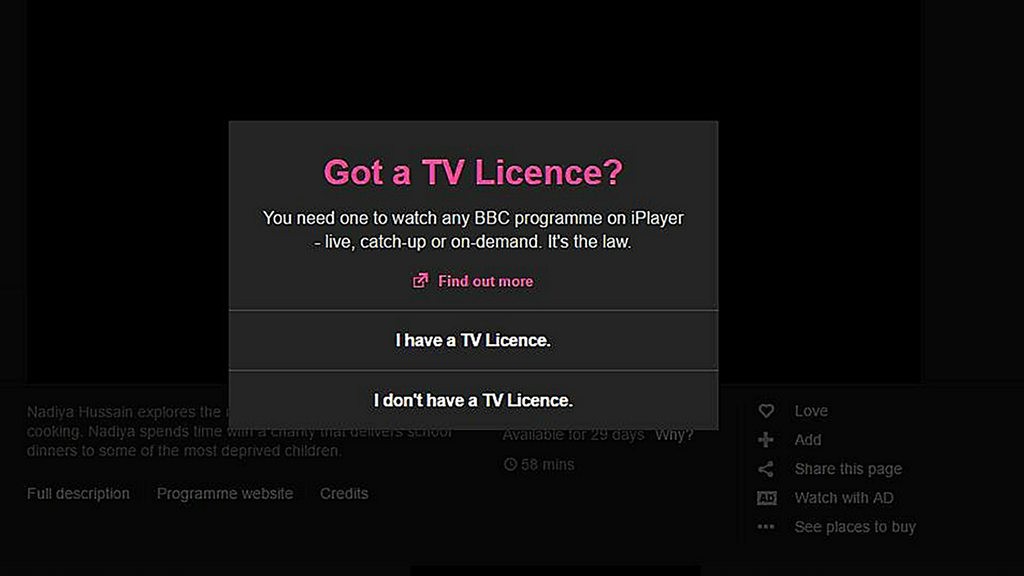
The government, according to The Times, is receptive to the idea. The studios are anything but.
What The MPA Actually Said
The Motion Picture Association doesn’t represent small fry. Its members are Netflix, Disney, Warner Bros. Discovery, Paramount, Sony Pictures, Universal and Amazon’s Prime Video and MGM Studios arm – in other words, most of the services sitting on your telly right now.
In the MPA’s full written evidence submitted to the government’s Charter Review, the group says it would “caution against any suggestion that third parties such as broadcasters’ VOD services and streaming providers play a role in the collection and enforcement of the licence fee.”
Its reasoning is blunt. Collecting the fee, it argues, “remains, for good reason, the duty of the BBC and TVL, and the focus should be on making this process more effective rather than creating new responsibilities for others.”
And there’s a warning aimed squarely at viewers, too. The MPA says handing streamers these new duties “would likely incur new costs for business, with a downstream impact on viewers and their viewing experience” – the suggestion being that if Netflix is forced to bolt on licence-checking machinery, it’s you who ends up paying for it one way or another, whether in cost or in hassle.
You can see why this argument might land well with the more BBC-sceptical end of our readership. It’s not often you get Netflix and the licence fee refuseniks on the same side of an argument.
They’re Not Keen On A Subscription BBC Either
There’s another idea the studios want to head off: turning the BBC into something you’d choose to pay for, like any other streaming service, instead of a fee everyone has to cover.
The MPA’s official line is that this would clash with the BBC’s whole reason for existing – the idea that it’s there for everyone, not just the people willing to pay for it.
That happens to be exactly the argument the BBC makes against subscription too, so on this one the studios and the corporation are oddly in agreement.
But it’s not hard to spot the other reason they’d rather it didn’t happen. A subscription BBC wouldn’t just be funded differently – it would be out there competing for your monthly tenner alongside Netflix, Disney+ and the rest, chasing the same subscribers and the same viewing hours.
Right now, the BBC is a partner the studios happily make shows with. Turn it into a paid service and it becomes a rival. Given the choice, you can see why they’d rather keep things as they are.
The One Thing They’re Happy About
It’s not all objection. There’s one government decision the studios are pleased with – the decision not to slap a levy on streaming revenues to help fund the BBC.
That idea has been floated before: a tax on the money Netflix, Disney and the others make in the UK, redirected towards the BBC.
The MPA welcomes the government’s commitment that it is “not considering” such a move, warning that a levy “could reduce streamer revenues available to invest directly in UK content and discourage investment in the UK film and television sector more broadly.”
Translated: tax us, and we’ll have less to spend on making shows here.
Why The Studios Even Care
It might seem odd that a bunch of American studios are weighing in so heavily on a very British argument about a very British institution. But the two are more tangled together than you’d think.
The BBC isn’t just a rival to these companies – it’s a partner. A large amount of the high-end television you watch is co-produced, with the BBC and a US studio splitting the bill on shows that might not otherwise get made.
The MPA’s submission reels off a list of examples: The Serpent, The Bombing of Pan Am 103 and Peaky Blinders with Netflix; Bluey with Disney; The Gold and The Castaways with Paramount; The Night Manager and Good Omens with Amazon; and The Capture with NBCUniversal.
So when the studios argue that anything which weakens the BBC’s finances – or saddles them with new costs – is bad for the wider UK production sector, they’re also protecting a relationship they benefit from directly.
What Happens Next
None of this is decided yet. The submissions to the Culture, Media and Sport Committee feed into a much larger process.
The government is working through responses to its Charter Review and is expected to publish a White Paper later this year setting out what it actually intends to do.
A draft Charter will then be debated in Parliament before the current one expires on December 31, 2027, with a new Charter due to take effect on January 1, 2028.
The BBC’s new Director-General, Matt Brittin, has already warned that deep cuts are coming regardless of how the funding question is settled.
What the studios’ intervention shows is that the question of how a modernised licence fee would actually be collected is shaping up to be just as contentious as the question of who should pay it.
The BBC wants help. The studios’ trade body has just said no.
For more TV and streaming news, Get our free newsletter.
The irony of this, as mentioned, is the BBC is a partner organisation to The Hollywood studios, and has been for decades. Shows like Graham Norton’s talk show are one long advert for each new movie release. The actors and directors are invited on every week to promote their latest films in exchange for telling a few jokes and in side stories. The BBC has been doing this free advertising for decades. ( Michael Parkinson in the 1970s and Wogan in the 1980s ) They will only come on if they can plug their film.
The BBCs real problem is successive management over decades have refused to listen to genuine criticism of their output and bias from those who fund it. Namely us. Now they find that their captive customers can find ways to escape. They want funding without accountability. Netflix, Amazon, Disney etc have their own issues, but I don’t have to pay for them all the time or indeed ever. If the BBC is really confident that they provide for everybody let them prove it by giving us the right to refuse subscription.
The great shame here is that in an avalanche of overwhelming US content the case for home grown British programming is real, and there is a demand for it. But the BBC has not listened to or valued many of its customers. It’s what happens with monopolies. They think they are irreplaceable.
The bbc know that if they become a paid subscription that’ll be the end of the BBC,9 out of 10 people won’t pay it and they know it, causing them to shut up shop.The bbc know they’re disliked the UK over and if the people of this island have the chance to put an end to these BS’rs they’ll do it. Good riddance!
I second that Philip,
The BBC should be a subscription service and only those who want it pay for it.
If it’s added to my council tax, I will stop paying it.
I’m seriously thinking of getting a campervan.
80million a year on DEI, is that what your licence is for ? No more off me for this tosh.
The BBC is mainly tosh woke material with the same old retread presenters.
Why should customers who already pay handsomely for broadband, Prime, Netflix etc be forced to pay for a bloated BBC?
I noticed that this article provides no quotes or evidence to support its claim that MPA “are not keen on a subscription BBC either”.
It also relies on a common refrain among BBC defenders: citing products, services, or programming that are not produced by the BBC and arguing that they would not exist without it.
It’s certainly true that the BBC co-produces some high-end television programmes with US studios. However, the claim that these programmes “might not otherwise get made” is speculative.
At most, the evidence shows that the BBC was one of the organisations involved in financing and producing them, not that they would have been impossible without BBC participation.
In addition, these co-production activities are carried out largely by BBC Studios, a commercial company operating in the international market. The existence of successful BBC Studios partnerships does not automatically demonstrate the necessity of compulsory licence-fee funding.
It’s going to be a Council Tax precept. The only thing that will work.
Simple take the BBC funding within the government and do it through taxation then everyone is happy
The BBC is done for. Politically, it can’t get the support needed to continue as a government charity and financially, it can’t compete with global behemoths like Netflix, Disney, Amazon and YouTube.
Imagine if those companies were all restricted to operating in one mid-sized country instead of expanding everywhere they can get into. This has been inevitable for years. The death throes will make for some news headlines like this one.
If any extra tax is forced onto Netflix, Prime or HBO Max, (The 3 we watch) I’ll simply dump my TV, I am not going to subsidise the BBC under any circumstances, I don’t watch it or live TV, and I certainly won’t be paying for it.
Just make the BBC stand on its own 2 feet. Why should We be forced to pay for something We dont want. Other channels have there own ways of funding themselves, so make the BBC do the same.
I for one will certainly not be happy, I don’t watch it, and want no part of it, why should I pay? What next, a petrol tax even if you don’t drive?